
The practice and science of natural medicine
Integrative Health &
Applied Nutrition
magazine (IHCAN)
Since 2002, Integrative Healthcare & Applied Nutrition magazine (formerly known as CAM magazine) has kept professional practitioners in-the-loop every month with its mix of news, views and fully referenced features.

Integrative Health &
Applied Nutrition
magazine (IHCAN)

Great news!
We’re CPD accredited!
We know how important CPD is to our readers, that’s why we’re delighted that reading IHCAN counts towards your self-certified CPD with BANT, the NNA and the ANP.
There’s CPD and there’s IHCAN CPD. Feel the difference.
Editor’s note –
June 2026
Specialist cardiologists reveal what they know about nutrition – it’s not pretty
Decades after alternative health experts first identified junk foods as a threat to health, European cardiology specialists have finally got around to issuing a consensus statement saying that ultra-processed foods are linked to a higher risk of heart disease and early death.
Ironically., the authors are urging doctors to discuss UPF intake with patients and offer practical advice on reducing consumption as part of routine healthcare. This despite the fact that doctors receive no training in nutrition (for instance – 30 minutes in a typical Harvard medical degree course, as recently revealed).
Prof Luigina Guasti from the University of Insubria, Varese, Italy, one of the lead authors (see our report on page 31), says: “UPFs, made from industrial ingredients and additives, have largely replaced traditional diets. Research suggests these foods are linked to several risk factors for cardiovascular disease, such as obesity, diabetes and high blood pressure, and to the risk of developing and dying from heart disease.
“However, this evidence has not yet made its way into the advice we give to patients on healthy eating”. No, it hasn’t, has it? But then you have no clue what healthy eating is anyway, do you?
I asked Bob, my AI, when the term junk food was first used. “He” referenced a newspaper headline reading “Junk Foods’ Cause Serious Malnutrition” from 1952 – the year I was born! The article was a reprint from 1948, originally titled “Dr Brady’s Health Column: More Junk Than Food” in which Dr Brady said they were anything made mostly of white flour or refined white sugar or syrup. Examples he gave included white bread, crackers, cake, sweets, ice cream soda, chocolate malted, sundaes, and sweetened carbonated beverages. His original term – “cheat food” – was apparently used in newspapers as early as 1916!
There is absolutely NO excuse for doctors – cardiologists of all people – taking this length of time to accept that junk foods are bad for us.
And guess what? The European Society of Cardiology is calling for MORE research! “We need long-term intervention trials to test whether reducing UPFs improves cardiovascular health”. No, we don’t. You’ve wasted enough time, contributed to enough deaths, already.
If these idiot specialists had any shame, they would issue an apology, not a consensus….
...Read more...
PCOS gets a holistic makeover
But here’s a consensus that is timely and welcome.
Polycystic ovary syndrome (PCOS) has been renamed polyendocrine metabolic ovarian syndrome (PMOS) following an extensive international consensus process published in The Lancet last month.
It signals a major shift in women’s health, according to our contributor, naturopathic physician Elizabeth Bartman, ND, Chief Medical Officer of EndoAxis, the hormone analysis and protocol specialists.
The name-change effort was led by endocrinologist Prof Helena Teede, of Monash University, who says: “What we now know is that there is actually no increase in abnormal cysts on the ovary, and the diverse features of the condition were often unappreciated”.
Elizabeth’s full analysis – what we know about PCOS and why PMOS is such a better fit – starts on page 40.
H2 – it’s a gas
Integrative practitioners are way ahead – again. This time with the early adoption of molecular hydrogen therapy.
UK and European scientists and funding institutions are basically ignoring it, while Japan, China and Russia dig into the molecule that “goes everywhere and does everything”.
Dr Grace Russell has been at the sharp end of research, publication – and the struggle to get funding. I’ve grilled her in depth for this month’s cover story (page 44).
What’s included with your subscription…
12 issues

ALL THE REFERENCES

SEARCHABLE ONLINE ARCHIVE

FREE IHCAN Conference Download (worth £50)

SELF-ACCREDITED CPD POINTS FROM BANT
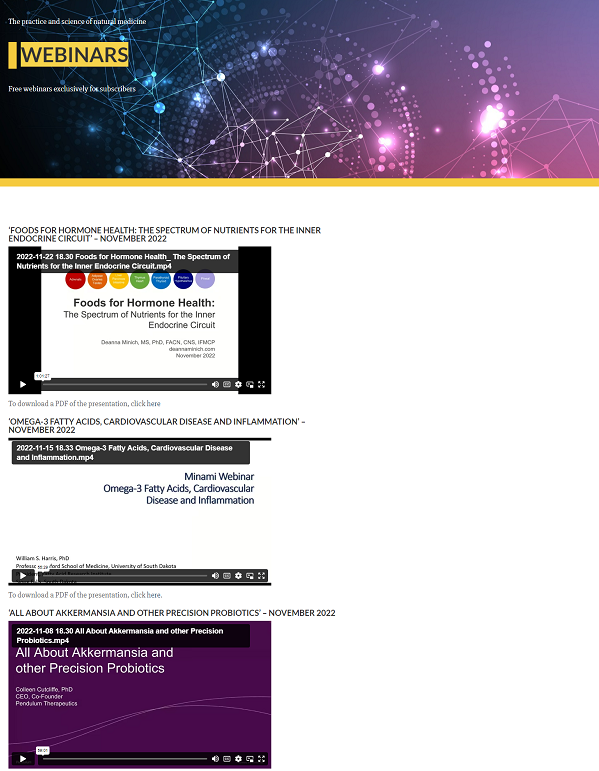
80+ free webinars
 Buy a subscription and we plant a tree
We care deeply about the planet and creating a business that gives back to nature.
That’s why we’ve partnered with One Tree Planted to plant a tree on your behalf, as a thank you for subscribing.
Trees clean our air and water, create habitats for biodiversity, contribute to our health and wellbeing, and create jobs for social impact.
Buy a subscription and we plant a tree
We care deeply about the planet and creating a business that gives back to nature.
That’s why we’ve partnered with One Tree Planted to plant a tree on your behalf, as a thank you for subscribing.
Trees clean our air and water, create habitats for biodiversity, contribute to our health and wellbeing, and create jobs for social impact.

“I consider IHCAN magazine to be a good reference source because the authors
are reputable, sound-thinking experienced clinicians. I read it to keep
up-to-date with current trends. Keep up the good work!”
Susan Farrer


We’re always fully referenced
We don’t put a big emphasis on being “evidence based” in the conventional sense, mainly because the bulk of the evidence used in meta analyses and systematic reviews and to produce “guidelines” is not to be trusted. As Prof Richard David Feinman puts it, the meta-analysis is the “most dangerous” activity plaguing modern medical literature. And RCTs are of no use in assessing complex conditions that we address with multiple interventions – such as Dr Dale Bredesen’s Alzheimer’s protocol. Likewise, we highly value the hard-won clinical experience of multiple practitioners accumulated over the years and handed down over generations of evolving natural medicine practice. That said, we do put a lot of effort into referencing our features. References are online to save space, available within our members area.
We’re always fully referenced
We don’t put a big emphasis on being “evidence based” in the conventional sense, mainly because the bulk of the evidence used in meta analyses and systematic reviews and to produce “guidelines” is not to be trusted. As Prof Richard David Feinman puts it, the meta-analysis is the “most dangerous” activity plaguing modern medical literature. And RCTs are of no use in assessing complex conditions that we address with multiple interventions – such as Dr Dale Bredesen’s Alzheimer’s protocol. Likewise, we highly value the hard-won clinical experience of multiple practitioners accumulated over the years and handed down over generations of evolving natural medicine practice. That said, we do put a lot of effort into referencing our features. References are online to save space, available within our members area.
START YOUR SUBSCRIPTION TODAY
Whether you prefer print or digital subscriptions, we’ve got you covered. And remember, ALL subscriptions include access to all the references,
an archive of searchable back issues stretching back to 2014 and lots of free webinars.


Advertising

Contact us
Target Publishing Ltd
The Old Dairy Hudsons Farm Fieldgate Lane
Ugley Green
CM22 6HJ
UK
Tel. 01279 810080
Email. info@targetpublishing.com
WhatsApp. 07457 405049
Quick Links
Subscribe
Advertise with us
Log In
IHCAN Summit (live in-person events)
References
Contact us